
Winterization Handyman Services in Omaha: Preparing Your Home for Freezing Weather
If you own a home in Omaha or the surrounding areas, hiring a winterization handyman is one of the smartest investments you can make before November rolls in. This guide covers everything from sealing air leaks and weatherstripping doors to protecting exposed pipes and checking your sump pump. Getting ahead of Nebraska’s freeze-thaw season saves you real money and real headaches.
Omaha winters are not gentle. We get deep freezes, wind-driven cold that finds every gap in your siding, and spring thaws that are hard on anything that was not properly sealed in the fall. Homeowners in Papillion, Bellevue, La Vista, and Council Bluffs all face the same conditions, and most of the damage we see every spring was preventable. A winterization handyman Omaha residents can count on will catch these problems before they cost you.
Why Home Winterization in Omaha Matters More Than You Think
Nebraska sits in a climate zone where temperatures can swing forty degrees in a single day. That kind of fluctuation does a number on caulk joints, door seals, and any pipe that runs along an exterior wall. Most of the water damage calls we get in January and February trace back to something that could have been caught in October.
The Department of Energy has a solid breakdown of fall and winter energy saving tips that aligns closely with what we recommend to Omaha homeowners every year. Drafts, poor insulation, and unprotected pipes are the big three.
For a broader picture of what a well-maintained home looks like throughout the year, our seasonal home maintenance guide is a good starting point before diving into winter-specific work.
Table of Contents
What a Winterization Handyman in Omaha Actually Does
A winterization handyman working within standard scope can handle a wide range of winter prep tasks. Here is what that looks like in practice on an Omaha home.
Exterior Caulking
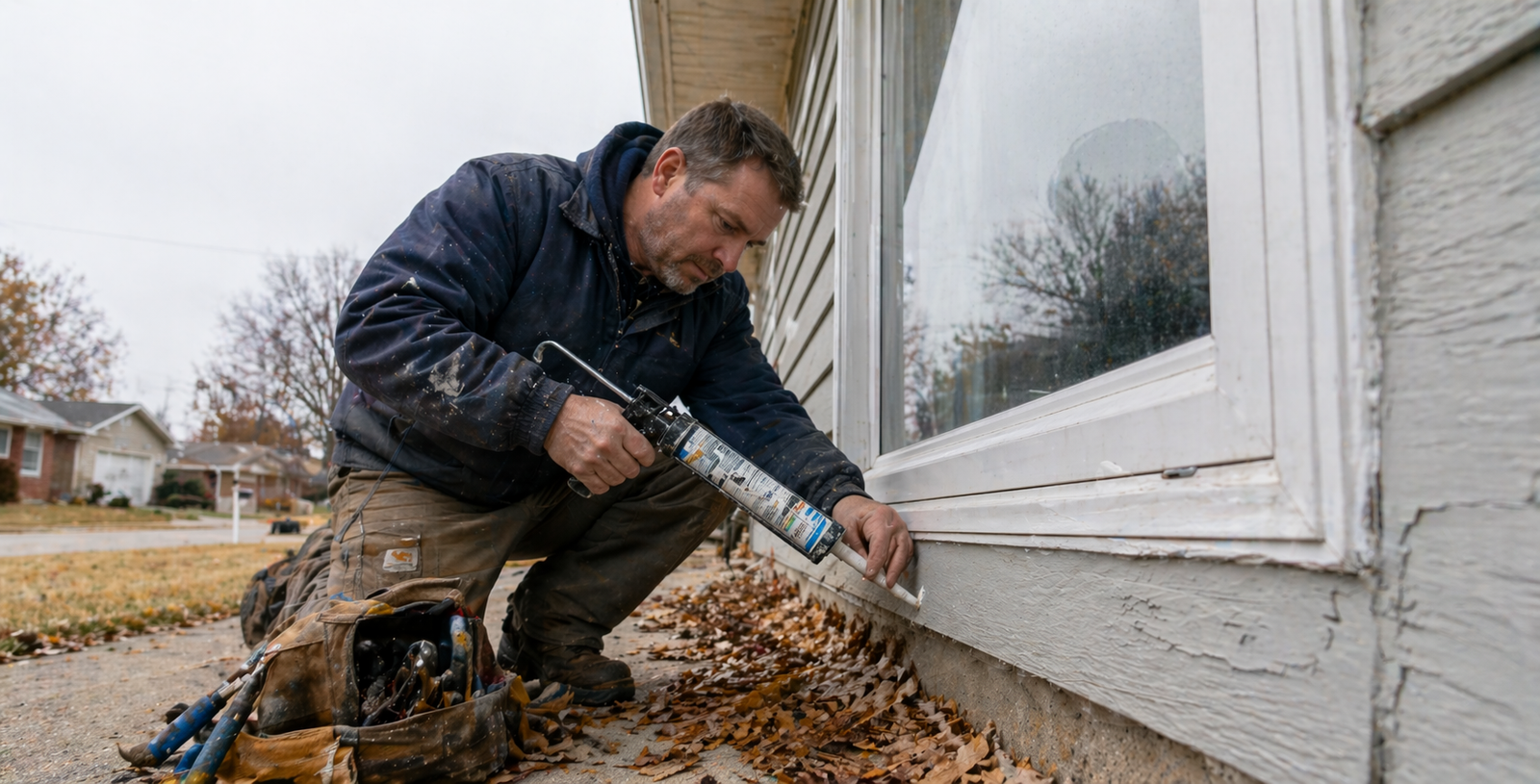
Any gap where two materials meet on the outside of your house is a potential cold air entry point. Around window frames, where siding meets trim, and at the foundation line are the first places to check. We use a paintable, flexible caulk rated for exterior use in freeze-thaw conditions. The cheap stuff hardens and cracks by January.
Weatherstripping Doors and Windows
This is one of the highest-return tasks in any winterization handyman job. A door that lets in cold air around the frame is costing you money every hour it sits. We replace old foam and felt strips with compression weatherstripping on entry doors and V-seal strips on windows. If your door needs more than just new weatherstripping, that is something we can assess during the same visit.
Exposed Pipe Insulation
Pipes running through unheated spaces like garages, crawl spaces, or along exterior walls should be wrapped before the first hard freeze. We use foam pipe insulation sleeves and, in high-risk areas, heat tape that is thermostat-controlled. This is standard scope for a winterization handyman and a fraction of the cost of dealing with a burst pipe.
Sump Pump Discharge Area
After a wet Nebraska fall, checking your sump pump discharge line is important. If that line freezes, water backs up. We make sure the discharge outlet is clear and positioned to drain away from the foundation. Simple, but overlooked constantly.
Storm Door Installation
A storm door adds a second layer of protection at your main entry and can cut down on drafts significantly. Installation on a standard Omaha home is usually a half-day job.
Draft and Air Leak Fixes
Electrical outlets on exterior walls, attic hatches, and recessed lights are common draft sources that most homeowners never think about. Foam gaskets and weatherstripping in these spots make a noticeable difference.

Home Winterization Checklist for Omaha Homeowners
Here is a quick reference for what to tackle before the first freeze:
- Caulk exterior window and door frames where gaps are visible
- Replace worn weatherstripping on all entry and patio doors
- Wrap exposed pipes in the garage, crawl space, or along exterior walls
- Inspect and clear the sump pump discharge line
- Check attic hatch seal and add insulation if needed
- Install or inspect storm doors on main entry points
- Foam-seal electrical outlets on exterior walls
- Check that outdoor hose bibs are shut off and drained
Winter Prep Timing: When to Schedule a Winterization Handyman in Omaha
| Task | Best Window | Why It Matters |
|---|---|---|
| Exterior caulking | September to mid-October | Caulk needs temps above 40 degrees to cure properly |
| Weatherstripping | October | Before heating bills climb |
| Pipe insulation | October to early November | Ahead of the first hard freeze |
| Storm door install | September to October | Avoid rushed installs in cold weather |
| Sump pump check | After fall rains, October | Clear discharge before freeze sets in |
What to Look for During Your Fall Home Walkthrough
Every fall before the first freeze, walk the perimeter of your home with a flashlight and look closely at every point where different materials meet. Most air and moisture problems start in spots that get ignored until something goes wrong. Catching them in October takes twenty minutes. Fixing the damage they cause in February takes a lot longer.
When doing your exterior walkthrough, you are looking for:
- Cracked or missing caulk around window and door frames
- Gaps where siding meets corner trim or the foundation line
- Weatherstripping on entry doors that is compressed flat or torn
- Any exposed pipe visible along exterior walls or in the garage
- Storm door hardware that is loose or a frame that no longer seals flush
Prepare Your House for Winter in Bellevue, Papillion, and La Vistanance Keeps Leaks From Starting
The same freeze-thaw cycles that hit central Omaha are just as hard on homes in the suburbs. Bellevue homes near the river deal with higher moisture levels heading into winter. Papillion and La Vista have seen a lot of new construction in the last decade, and some of that newer housing stock has shown weatherstripping and caulk that needs attention earlier than expected.
Our seasonal tasks guide for Omaha and Nebraska winters goes deeper into what local weather patterns mean for your specific maintenance schedule.
For a visual walkthrough of basic winterization techniques, this weatherproofing tutorial gives a good overview of the hands-on side of the work.
According to the Department of Energy, drafts and air leaks in an average home can account for a significant portion of winter heating loss, much of it coming from gaps that cost very little to seal. In Nebraska, where temperatures regularly drop below zero and freeze-thaw cycles run from October through March, that heat loss adds up faster than in milder climates. Most of it is preventable with a single fall visit from a winterization handyman Omaha homeowners can book well before the cold sets in.
Best Times to Schedule Winterization Handyman Work in Omaha
Timing matters with winter prep. Some tasks depend on temperature for materials to work correctly, and booking too late in the season means rushing jobs that need to be done right. Here is when to schedule each part of your winterization handyman Omaha service:
- Book exterior caulking between late September and mid-October when daytime temps are still reliably above 40 degrees for proper cure
- Schedule weatherstripping and door seal work in October before heating season drives up demand
- Arrange pipe insulation in unheated spaces no later than early November ahead of the first hard freeze
- Plan storm door installation in September or October to avoid cold-weather installs that make fitting and adjustment harder
- Request a full winterization walkthrough at least three to four weeks before you expect the first sustained freeze in your area
Conclusion
Winterization handyman services in Omaha are straightforward, cost-effective, and genuinely worth doing every fall. Caulking, weatherstripping, pipe insulation, storm doors, and draft sealing are all tasks a qualified winterization handyman can handle efficiently before the deep cold arrives. The investment is small compared to what a single burst pipe or a winter’s worth of high heating bills will cost you. If you want to get your home ready before the weather turns, reach out and we will put together a winter prep visit that makes sense for your home.
Freqently Asked Questions
Related Articles
- Kitchen Refresh Without Renovation: Handyman Upgrades for Omaha Homeowners
- Local Handyman in Omaha, NE: Small Jobs, Big Difference for Homeowners
- Preventing Costly Water Damage: Handyman Leak Prevention Tips for Omaha Homes
- Drywall Repair Handyman in Omaha: Holes, Cracks, and Paint Touch-Ups
- Door Repair Handyman in Omaha: Sticking Doors, Loose Locks, and Hardware Upgrades
- Move-In and Move-Out Handyman Services in Omaha: Rental Punch Lists Done Fast