
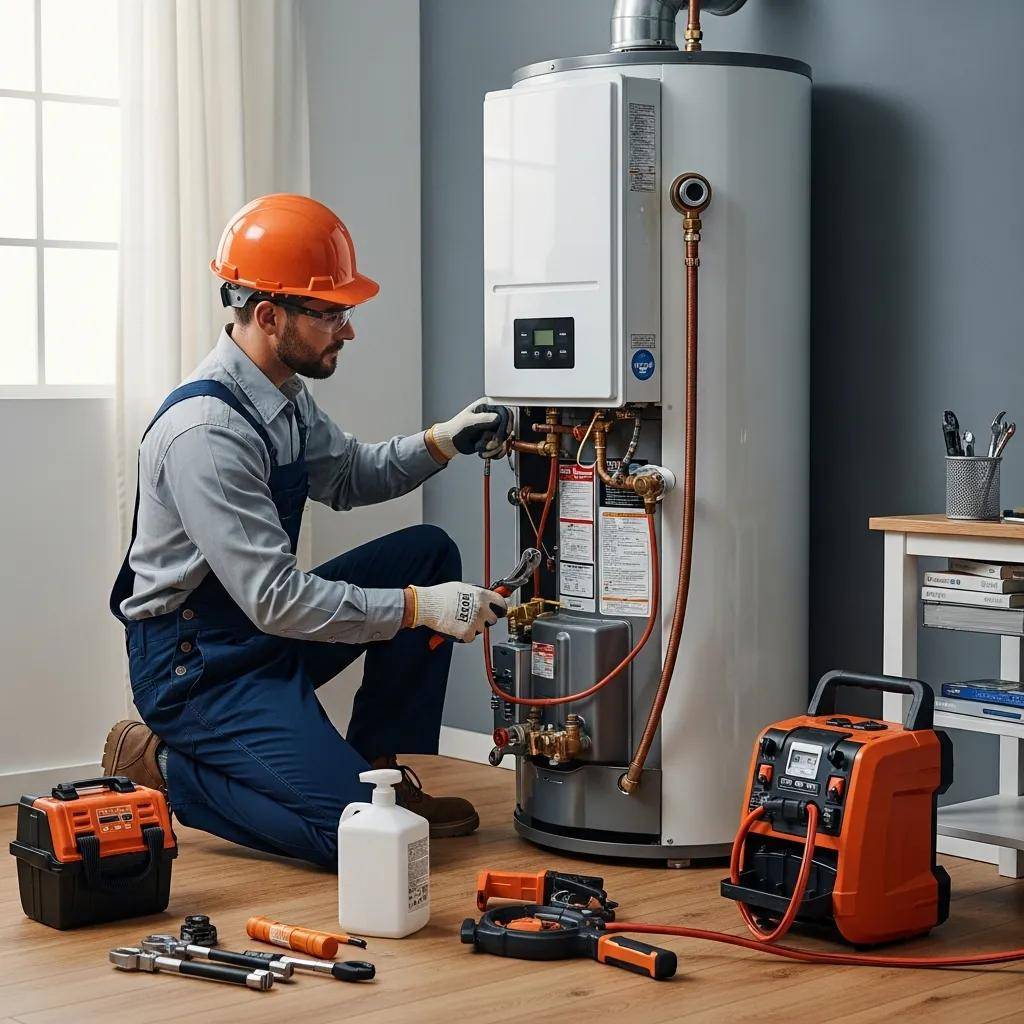
Comprehensive Water Heater Maintenance Services in Omaha, NE: Expert Care for Efficiency and Longevity
Regular, professional water heater maintenance is crucial for Omaha property owners, preserving efficiency, reducing repair risks, and extending equipment life. This guide covers essential maintenance tasks like flushing, anode rod inspection, and thermostat testing, alongside decision rules for repair versus replacement and specific considerations for tankless systems. You’ll find actionable checklists, step-by-step instructions, and cost benchmarks for Omaha, framed for both homeowners and portfolio managers. We also note local service options and how to schedule inspections, using keywords like water heater maintenance, water heater flush, and water heater repair cost Omaha for targeted guidance.
Why Is Regular Water Heater Maintenance Essential for Your Property?
Regular water heater maintenance involves inspecting, testing, and servicing key components to preserve safety, efficiency, and lifespan. By removing sediment, testing valves, and verifying thermostatic controls, maintenance restores heat transfer efficiency, reduces energy waste, and prevents corrosion that leads to leaks. For property owners, documented maintenance reduces emergency repairs, protects comfort, and supports warranty compliance, preserving resale and rental value. It also identifies small failures before they escalate into costly water damage or service interruptions.
- Key long-term benefits include extended equipment lifespan, lower energy bills, and fewer emergency repairs.
- Maintenance improves safety by reducing the risk of leaks, scalding, and pressure-related failures.
- Documented service preserves warranty eligibility and supports property resale and tenant retention.
How Does Maintenance Extend Water Heater Lifespan and Improve Efficiency?
Maintenance extends lifespan and improves efficiency by addressing core failure mechanisms. Sediment accumulation on tank bottoms and heating surfaces reduces thermal transfer, increasing energy consumption; flushing removes this insulating layer. The sacrificial anode rod prevents tank wall corrosion; inspecting and replacing a depleted anode avoids leaks. Calibrating thermostats and testing the temperature-pressure relief (T&P) valve ensures safe operation and prevents overheating or pressure buildup, which can shorten component life.
What Common Problems Can Preventive Maintenance Avoid?
Preventive maintenance detects and corrects common failure modes. Sediment buildup causes popping noises and uneven heating, resolved by flushing. Anode rod depletion leads to corrosion and rust-colored water, preventable with timely replacement. Thermostat drift and failing heating elements cause inconsistent temperatures and higher energy usage, identified by routine checks before affecting tenants.
For property owners seeking licensed help in Omaha, Villa My Home offers reliable plumbing maintenance and inspections tailored to multi-unit and single-family properties, providing transparent estimates and personalized service.
What Does a Complete Water Heater Maintenance Checklist Include?
A complete water heater maintenance checklist covers inspection, testing, cleaning, and small-component replacement to preserve reliability and efficiency. Key tasks include draining and flushing the tank, inspecting and replacing the anode rod, testing the T&P valve, verifying thermostat calibration, checking for leaks and corrosion, and ensuring clear venting for gas models.
| Task | Frequency / Estimated Time | Why It Matters |
|---|---|---|
| Drain and flush tank | Annually (30–60 minutes) | Removes sediment to restore efficiency and reduce noise |
| Inspect/replace anode rod | Every 3–5 years (30–90 minutes) | Prevents corrosion and tank failure |
| Test T&P valve | Annually (10–15 minutes) | Ensures safe pressure/temperature relief |
| Check thermostat & elements | Annually (20–40 minutes) | Maintains correct temperature and energy use |
| Inspect fittings & vents | Annually (15–30 minutes) | Detects leaks, corrosion, and combustion issues |
Regular adherence to this checklist ensures efficient operation and reduces the chance of emergency repairs. Villa My Home’s plumbing service model includes these core tasks during scheduled maintenance visits.
How to Perform a Water Heater Flush: Steps and Benefits
A tank water heater flush removes sediment and improves efficiency. Safely shut off power/gas and cold-water supply. Connect a garden hose to the drain valve, directing discharge to a safe drain. Open the T&P valve for air, then open the drain valve until water runs clear. Flush with fresh water if sediment is heavy. Close valves, refill the tank, restore power/gas, and check operation.
- Turn off power or gas and close cold-water inlet.
- Attach hose to drain valve and open T&P valve to vent.
- Open drain valve and flush until water runs clear.
- Close valves, refill tank, restore power/gas, and monitor operation.
A flushed tank runs quieter, heats more efficiently, and avoids element burnout. Call a professional if you encounter blocked valves or heavy corrosion.
When and Why Should You Replace the Anode Rod and Inspect Components?
The anode rod protects the tank from corrosion by sacrificing itself. Inspect it every 2–3 years and replace it every 3–5 years (or when heavily depleted) to prevent tank wall corrosion and leaks. A depleted anode appears heavily corroded or reduced to a thin core. Replacing it is far less expensive than replacing the entire tank. During inspection, technicians also check heating elements, thermostats, drain valves, and fittings for wear.
How Do Tankless Water Heater Maintenance Needs Differ?
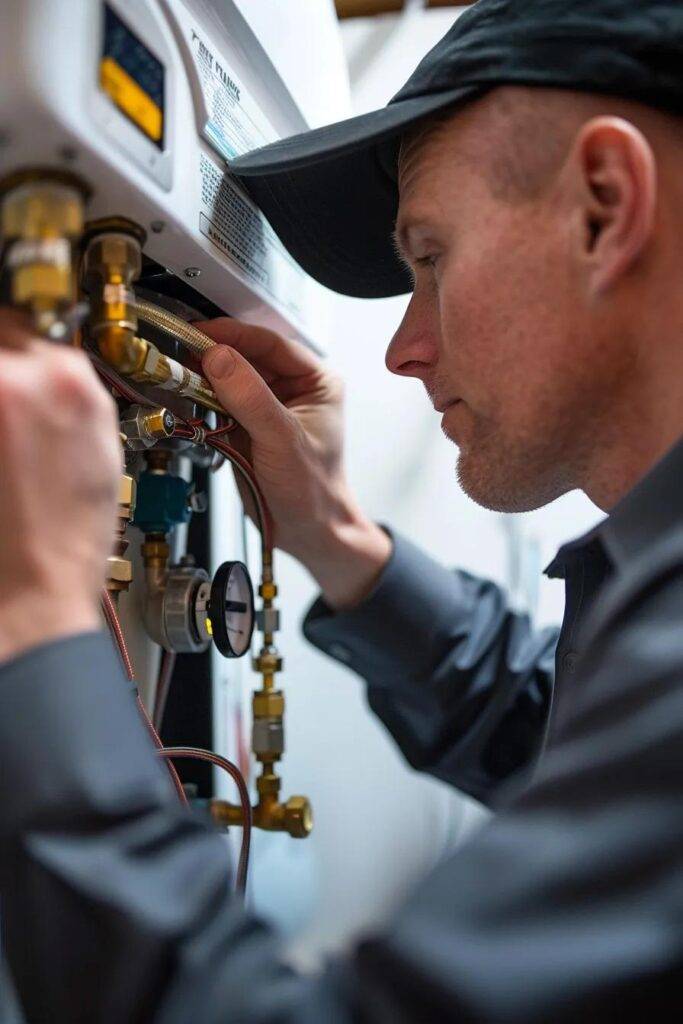
Tankless water heater maintenance focuses on descaling and inlet filter cleaning, unlike tank flushing. Tankless units use high-velocity heat exchangers sensitive to scale buildup, so routine descaling preserves heat transfer and flow rate. Intake filters and air vents also require periodic cleaning to prevent error codes. Tankless systems often require manufacturer-recommended service cycles for warranty compliance.
| Component / System | Task | Recommended Frequency |
|---|---|---|
| Tank water heater | Flush tank | Annually |
| Tank water heater | Anode rod check/replace | Every 3–5 years |
| Tankless heater | Descale heat exchanger | Every 6–12 months |
| Tankless heater | Clean inlet filter | Every 6–12 months |
What Is the Recommended Descaling Frequency for Tankless Water Heaters?
Descaling frequency for tankless systems depends on water hardness and usage. In hard-water areas, professional descaling every 6 months is recommended; moderate-hardness conditions typically require annual descaling. Signs that descaling is due include reduced hot-water flow, decreased temperature stability, and error codes. Professional service is often recommended to avoid voiding warranty and properly flush the heat exchanger.
How Does Proper Tankless Maintenance Enhance Performance and Longevity?
Proper maintenance, including regular descaling and intake cleaning, maintains efficient heat transfer and consistent flow rates, reducing component overheating and electronic faults. Scale acts as an insulator, forcing the system to work harder, increasing energy use and shortening component life. Removing scale restores design performance and reduces repair risk. Regular service also verifies ignition systems, sensors, and venting, preserving safety and warranty compliance.
What Are the Typical Water Heater Repair Costs and When Is Replacement Advisable?
Repair costs vary by component, unit type, and local labor rates. Consider replacement when repair costs exceed roughly 50% of a new unit’s cost or when the unit is older than its expected lifespan (8–12 years for tank units). Local factors in Omaha, such as labor access and permit requirements, also influence estimates.
| Repair Item | Typical Cost Range (Omaha) | Replacement Threshold |
|---|---|---|
| Heating element replacement | $150–$300 | Replace if >50% of new unit cost |
| T&P valve replacement | $75–$200 | Replace tank if recurrent corrosion or leaks |
| Anode rod replacement | $50–$200 | Replace if repeated anode failures occur |
| Leak repair (minor fittings) | $150–$500 | Replace if tank corrosion or multiple leaks |
How to Decide Between Repair and Replacement Based on Age and Repair Frequency?
For a tank water heater under 8 years with a small repair cost, repair is often cost-effective. If the unit is over 10 years or has had multiple recent repairs, replacement is usually a better investment. Apply the 50% rule: if a repair approaches half the estimated replacement cost, replacement typically yields better lifecycle economics and efficiency gains. Consider efficiency improvements of modern units.
What Factors Influence Water Heater Repair Costs in Omaha, NE?
Local repair costs are influenced by unit type (tank vs. tankless), brand, part availability, installation accessibility, and local labor rates/permit requirements. Tankless repairs often have higher parts and labor costs due to complexity. Accessibility, such as tight utility closets, adds to labor time. For more information, visit plumbing handyman Omaha.
How Can Professional Water Heater Maintenance Services Benefit Property Owners and Managers?
Professional water heater maintenance services reduce downtime, lower lifecycle costs, and provide documentation for warranty claims and portfolio management. Technicians identify faults early, optimize settings for efficiency, and provide written reports for budgeting and compliance. For multi-unit properties, scheduled maintenance plans reduce tenant disruptions and streamline emergency response.
- Scheduled maintenance reduces emergency calls and associated premium labor costs.
- Documented inspections support warranty claims and property-level recordkeeping.
- Managed service plans simplify budgeting and improve tenant satisfaction.
Why Hire Villa My Home for Reliable Water Heater Care in Omaha?
Villa My Home provides local plumbing and handyman services in Omaha with a focus on personalized repair, transparent pricing, and consistent workmanship. As a local provider, Villa My Home performs core maintenance tasks—inspections, flushing, anode rod checks, and T&P valve testing—and coordinates follow-up repairs or installations. This streamlines scheduling and ensures technicians understand Omaha-specific factors.
What Emergency Repair and Installation Services Are Available?
Emergency water heater scenarios include major leaks, total loss of hot water, gas odor, or pressure-relief failures. Professional emergency service prioritizes rapid diagnosis, temporary mitigation (like shutting water/gas), and safe, code-compliant repairs or replacements. Responses involve immediate containment, isolating hazards, and expedited replacement when repair isn’t viable.
- Rapid diagnosis and temporary mitigation to prevent damage.
- Safe isolation of gas or electrical supply when hazards are detected.
- Fast-track replacement and follow-up commissioning when needed.
What Are Frequently Asked Questions About Water Heater Maintenance?
This FAQ section answers common owner questions with concise guidance.
How Often Should I Flush My Water Heater to Maintain Efficiency?
Flush tank water heaters at least once a year to remove sediment. In hard-water areas or for high-use properties, flush every six months. Regular flushing reduces energy use, minimizes noises, and protects heating elements. If you notice noisy operation, fluctuating temperatures, or discolored water, perform a flush sooner.
What Are the Signs That My Water Heater Needs Professional Service?
Warning signs include visible leaks, rusty or discolored hot water, persistent popping/rumbling noises, inconsistent hot-water delivery, or gas odors. If you observe multiple symptoms or any sign of corrosion, schedule a professional inspection promptly to avoid property damage.
For complex issues or emergency repairs in Omaha, Villa My Home plumbing offers targeted support, scheduled maintenance plans, and transparent estimates.
Related Articles
- Preventing Costly Water Damage: Handyman Leak Prevention Tips for Omaha Homes
- Seasonal Home Maintenance in Omaha: What a Handyman Should Handle vs DIY
- Omaha Home Maintenance Checklist by Season: What to Fix Before It Breaks
- Handyman Services for Rental Properties in Omaha: A Landlord’s Maintenance Guide
- Kitchen Refresh Without Renovation: Handyman Upgrades for Omaha Homeowners